.svg)


Causes of Hair Fall: 10 Common Reasons for Hair Loss You Should Know
After a long day, all you want is to wind down. But somewhere between getting home and getting to bed, you notice it. More hair than usual on the pillow, the brush, the drain.
Most people file it away for later. Later becomes a habit. But the body has a way of making itself heard, and hair fall is one of the quieter signals that tends to grow louder over time. A little every day is expected. A lot, consistently, is your cue to look closer.
The reasons behind it are rarely obvious at first glance. Hair fall can trace back to something as everyday as diet or sleep, or something deeper like hormonal shifts or an underlying condition quietly unfolding. Read this blog to know what is actually driving it, making it your first step toward doing something meaningful about it.
What is Hair Fall & When Should You Be Concerned?
Hair grows, rests, and sheds continuously. The problem begins when shedding outpaces regrowth or produces thinner, weaker strands.
Early Warning Signs
Top 10 Causes of Hair Fall
Most hair loss involves a combination of genetic predisposition, hormonal shifts, nutritional gaps, and lifestyle triggers.
Hereditary Hair Loss (Genetic Factors)
If your father, uncle, or maternal grandfather experienced hair thinning, you likely will too. Hereditary hair loss, clinically called androgenetic alopecia, is the most common reason for hair loss worldwide.
- In men, it follows a predictable pattern: temples recede first, then the crown thins.
- In women, hereditary hair loss usually presents as diffuse thinning across the top of the scalp rather than a defined pattern.
A hormone called DHT (dihydrotestosterone) binds to genetically sensitive hair follicles and gradually miniaturizes them. Over time, those follicles stop producing hair entirely. Genetic hair loss responds well to early treatment that blocks DHT activity and stimulates follicle health.
Hormonal Imbalance & Hair Loss
When hormones shift, hair often takes the hit first. Hair loss from hormone imbalance can stem from several conditions:
- Thyroid dysfunction disrupts the hair growth cycle, causing diffuse shedding
- PCOS (Polycystic Ovary Syndrome) elevates androgens in women, triggering male-pattern-like thinning
- Postpartum hormonal drop: Oestrogen levels fall sharply after childbirth, pushing large numbers of hairs into the shedding phase
- Perimenopause and menopause reduce oestrogen over time, thinning hair progressively
Up to 50% of women experience noticeable hair thinning at some point in their lives, and hormonal imbalance is among the top causes. A simple blood panel covering thyroid function, androgens, and iron levels can reveal the issue correctly, and you can start the baldness treatment at the soonest.
Stress Can Cause Hair Loss
Stress can cause hair loss through a specific, well-documented process. When your body experiences physical or emotional stress — surgery, illness, or major loss — it can trigger Telogen Effluvium: a condition where a large percentage of hair follicles simultaneously shift from the active growth phase into the resting phase.
Six to twelve weeks later, that hair starts falling out in large amounts. Because the timing is delayed, most people never connect the shedding back to the original stressor.
Nutritional Deficiencies
Your hair follicles are among the most metabolically active cells in your body. They need a steady nutrient supply to produce strong, healthy hair. Common deficiencies linked to hair fall:
| Nutrient | How Deficiency Affects Hair |
|---|---|
| Iron (Ferritin) | Low ferritin is one of the most overlooked causes of hair fall, especially in women |
| Protein | Hair is almost entirely protein (keratin); inadequate intake directly weakens strands |
| Biotin (Vitamin B7) | Supports keratin structure; deficiency leads to brittle, thinning hair |
| Vitamin D | Plays a role in activating hair follicles; low levels are frequently found in people with alopecia |
| Zinc | Involved in follicle repair; deficiency disrupts the hair growth cycle |
Sudden Hair Loss (Medical or Lifestyle Triggers)
Sometimes hair loss is sudden and alarming. The reason for sudden hair loss is often a physiological shock to the system. Triggers that you might not be aware of:
- Major surgery or hospitalisation
- Extreme crash diets or prolonged caloric restriction
- Certain medications — beta blockers, antidepressants, blood thinners, retinoids, and some contraceptives
If you've recently recovered from a serious illness or changed medications and are noticing rapid shedding, connect those dots and discuss it with a hair specialist..
Reasons for Sudden Hair Loss in Males
Sudden hair loss among males can be triggered by the following:
- DHT sensitivity: Your genes make your hair react strongly to DHT hormones, causing faster hair loss and thinning than expected
- High-protein supplement misuse: Some workout supplements boost hormones that trigger more hair shedding
- Sleep deprivation and chronic work stress: Poor sleep and constant stress disrupt your hormones and speed up hair loss
- Scalp inflammation: Bad scalp hygiene or skin conditions weaken hair roots from the inside
Poor Hair Care Routine
Sometimes damage is self-inflicted through habits that seem harmless. Practices that damage hair and scalp health:
- Excessive heat styling weakens the hair shaft and increases breakage
- Chemical treatments strip the hair's protective layer
- Over-washing removes natural scalp oils, causing the scalp to become dry and reactive
- Tight hairstyles cause traction alopecia, a form of hair loss from mechanical stress
None of the above cause permanent hair loss on their own. But combined with genetic predisposition, they can accelerate noticeable thinning.
Scalp Infections & Conditions
Like any skin, the scalp can develop infections and inflammatory conditions that interfere with hair growth.
- Dandruff (Seborrheic Dermatitis): Chronic inflammation around follicles weakens the hair root
- Fungal infections (Tinea Capitis): Cause patchy hair loss, scalp itching, and scaling
- Psoriasis: Autoimmune-driven scaling and inflammation that disrupts the follicle environment
Most scalp conditions are highly treatable once properly diagnosed. The mistake is treating symptoms with over-the-counter shampoos for months without consulting a dermatologist.
Medical Conditions & Medications
Medical conditions that can be the reason for hair loss:
- Alopecia Areata: Your immune system mistakenly attacks your hair follicles, causing patchy hair loss
- Lupus and autoimmune disorders: These conditions cause your body to attack itself, leading to heavy hair shedding
- Anaemia and chronic illness: When your body lacks oxygen or nutrients, your hair follicles don't get what they need to grow
- Chemotherapy: Cancer treatment drugs are strong enough to damage hair follicles along with cancer cells
Aging & Natural Hair Thinning
With age, the hair growth cycle naturally slows. Follicles that once produced thick, pigmented hair gradually produce thinner, shorter strands.
This begins in the 30s and becomes more visible in the 40s and 50s due to reduced scalp circulation, declining hormone levels, and cumulative follicle fatigue.
Common Causes of Hair Loss in Men vs Women
To present the common causes comprehensively, the following table has been prepared.
| Factor | Men | Women |
|---|---|---|
| Most common cause | Genes & DHT hormones | Hormonal changes (PCOS, thyroid, after childbirth) |
| Pattern | Hair recedes at temples & crown | Hair thins all over the top of scalp |
| Secondary triggers | Stress, lifestyle habits, supplements | Lack of nutrients, medications |
| Age of onset | Starts in 20s or 30s | Starts in the 30s or 40s; can happen after childbirth |
| Reversibility | Can slow down with early treatment | Reversible in nature, especially if hormonal |
Top 5 Reasons for Hair Loss (Quick Summary)
The top 5 reasons that will cause hair loss can be brought down to these:
Genetic sensitivity to DHT leading to gradual miniaturization of hair follicles
Thyroid dysfunction, PCOS, postpartum hormonal drop, and menopause-related changes
Iron, protein, Vitamin D, and biotin deficiencies silently undermining follicle health
Telogen Effluvium triggered after major physical or emotional shock, appearing 6–12 weeks later
Autoimmune conditions, chronic illness, and chemotherapy drugs disrupting the hair growth cycle
How to Identify the Exact Cause of Hair Loss?
Self-diagnosis is unreliable. The same symptom — diffuse shedding — can be caused by low ferritin, thyroid issues, or genetic factors. The treatment for each is completely different.
Scalp Analysis — Using trichoscopy to examine follicle health and scalp condition at a microscopic level that the naked eye cannot detect.
Blood Tests — Checking ferritin, thyroid (TSH, T3, T4), DHT levels, Vitamin D, and zinc to identify hidden nutritional and hormonal triggers.
Medical History Review — Recent illnesses, medications, dietary changes, and family history all provide critical context for accurate diagnosis.
How Evoke Clinic Helps You Identify the Exact Cause of Hair Fall
At Evoke Hair & Skin Clinic, diagnosis comes first. Every consultation begins with a detailed scalp analysis, a review of blood markers, and an assessment of your hair loss pattern and history.
What Sets Evoke Apart
Advanced Hair Loss Treatments at Evoke Clinic
After diagnosis, Evoke offers clinically validated options. Every treatment plan is personalised to your diagnosis, degree of hair loss, and lifestyle.
GFC with Microneedling
Growth factor concentrate delivered deep into the scalp to stimulate follicle regeneration. Microneedling creates micro channels for deeper penetration and better results than GFC alone.
PRP (Platelet-Rich Plasma)
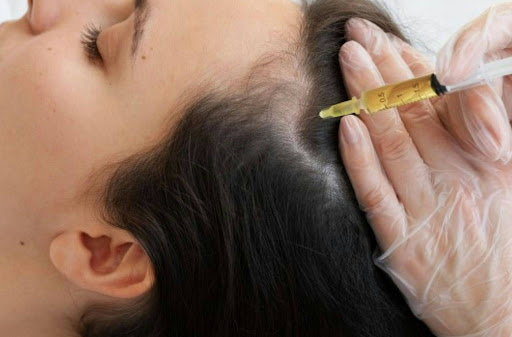
Your own platelets, concentrated and injected to reactivate dormant follicles. Most patients see meaningful improvement after 4 to 6 sessions. Strong clinical evidence for androgenetic and stress-related hair loss.
QR678 Treatment
A proprietary growth-factor formula with strong clinical backing. Clinically developed specifically for androgenetic alopecia and telogen effluvium. Effective for both men and women.
GFC Therapy
A non-surgical, biology-based approach with excellent outcomes in early-to-moderate loss. Uses isolated and concentrated growth factors extracted from your own blood for targeted results.
Hair Transplant (FUE / FUT)
Permanent, natural-looking restoration for advanced hair loss. FUE offers no linear scar and faster recovery. FUT allows for a larger number of grafts in a single session — ideal for significant coverage needs.
Visit an Evoke Hair Clinic in Delhi, Gurgaon, or Noida
With 7 clinics across Delhi NCR, getting a proper hair loss diagnosis has never been more accessible. Each location offers the same diagnostic-first approach: scalp scan, blood work, and a treatment plan built specifically around your cause.
Book a Free Hair Loss Consultation at Your Nearest Evoke Clinic
Walk in with questions. Walk out with a plan. Expert diagnosis at 7 locations across Delhi NCR — no obligations, completely free.