.svg)

Hair Transplant Before and After: The Transformation Journey
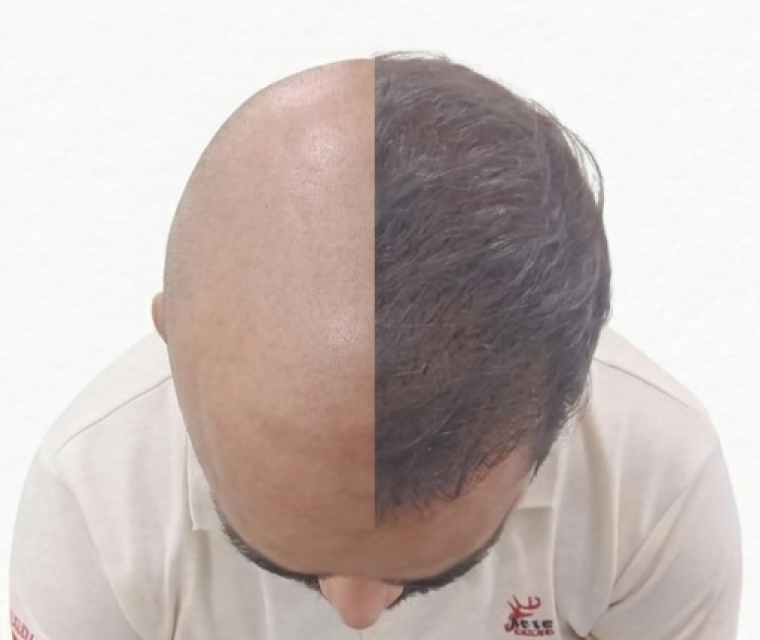
Most before and after photos show two things: a bald head and a full one. What they skip is everything in between — the 10 days of prep before surgery, the shedding phase that scares almost every patient, and the 9 months of waiting before the real result shows up.
A hair transplant result is not just about the procedure. It is about how well the entire process is handled, from the first consultation to the last follow-up. This blog breaks down every stage, so you know exactly what to expect before, during, and after.
The "Preparation Phase" — 10 Days Before Your Surgery
Most people searching for receding hairline solutions focus entirely on the procedure itself. But graft survival starts 10 days before you sit in the chair, and skipping this phase is one of the most common reasons results underperform.
Medications to Stop and Why They Matter for Graft Survival
These are not optional precautions. Each of these affects how cleanly the procedure goes and how well grafts survive:
| Medication | Why You Need to Stop It |
|---|---|
| Aspirin | Thins the blood, increases intraoperative bleeding, reduces surgeon visibility during graft placement |
| Vitamin E supplements | Acts as a blood thinner at higher doses, same bleeding risk as Aspirin |
| Multivitamins | Many contain Vitamin E and iron in doses that affect clotting |
| Minoxidil | Stop 3 days before — can cause scalp sensitivity during extraction |
Lifestyle Adjustments
Three things that directly affect how your procedure goes:
Alcohol
Reduces blood clotting and scalp circulation. Stop at least 5 days before. Even one night of heavy drinking 2 days before can increase bleeding during surgery.
Smoking
Nicotine constricts blood vessels, which reduces oxygen delivery to freshly implanted grafts. Ideally stop 2 weeks before. At minimum, stop 5 days before.
Clothing on Surgery Day
Wear a button-down or zip-up shirt only. No pullovers or crew necks. Pulling fabric over your head after the procedure can dislodge grafts that are not yet anchored.
The Day of the Procedure — What Happens at the Clinic?
The procedure day is long, usually 6 to 8 hours, but most patients are surprised by how little discomfort there is. Here is what happens, step by step:
Applied to the donor and recipient area. The only moment of discomfort. Once it kicks in, you will not feel anything.
Follicles are taken from the back and sides. These are DHT-resistant, meaning they will not fall out after transplantation.
Grafts are sorted under a microscope. Single hair grafts go to the hairline for a natural look; doubles and triples go behind for density.
Grafts are placed at angles that match your natural growth pattern. Hairline, temple, and crown distribution is planned before a single graft is placed.
Immediate Post-Op Care (Days 1–7)
The first 7 days are the most critical window of your entire hair transplant journey. Grafts are sitting in their channels but are not yet anchored to the scalp, and two things can knock them out: touching them and swelling.
The First 48 Hours: The "No-Touch" Rule
For the first 48 hours, grafts are sitting in their channels but not yet bonded to the scalp. Any pressure, scratch, or rub can dislodge them.
Sleeping Position and Managing Swelling (Edema)
Sleep at a 45 degree angle for the first 5 nights using 2 to 3 pillows. Gravity pulls post-operative fluid toward the forehead and a flat head makes swelling worse. Forehead swelling peaks at Day 3 and 4 and clears by Day 5 or 6. Puffy eyes on Day 3 are normal, not a complication.
Hair Washing: The No-Pressure Technique
No direct water pressure on the recipient area for the first 2 weeks. From Day 3, follow these steps:
Step 1: Saline Spray
Spray the saline solution gently over the recipient area to loosen any debris without applying pressure.
Step 2: Cupped Hand Rinse
Pour water using a cupped hand only — never a shower jet. Direct pressure can dislodge healing grafts.
Step 3: Air Dry Only
Air dry the recipient area completely. No towel rubbing. Delhi patients should use RO or filtered water where possible — Delhi's municipal water runs at 300 to 700 mg/L TDS, which is harsh on a healing scalp and can cause irritation on fresh grafts.
The Shedding Phase — Why "Shock Loss" is a Good Sign
Weeks 2 to 4 look alarming. The transplanted hair falls out and most patients assume something has gone wrong. It has not.
The Biology of Shock Loss
When follicles are implanted, the trauma pushes them into telogen — the resting phase. The shaft falls but the root stays in the scalp, alive. Within 8 to 12 weeks it enters anagen, the active growth phase, and new hair begins to grow.
The Winter Tree Analogy
Think of it this way: the shaft is like a leaf falling in winter. The tree is still alive underground. Come spring, it grows back. Shedding at this stage is not failure — it is the cycle working exactly as it should.
Real Results — A Gallery of Evoke Clinic Success Stories
High-quality, high-contrast before and after photography showing the full range of results across graft counts and hair loss stages.
📸 Before & After Patient Gallery
Tag images with details such as "Patient from South Delhi — 3500 Grafts" or "Gurugram Client — Frontal Hairline Restoration" for full context.
Consult the Experts — Visit Evoke Hair Clinic in Delhi NCR
Not sure which stage you are at or whether you are ready for a transplant? Evoke's doctors bring over 15 years of combined experience in hair restoration — meaning the person reading your scalp has seen every grade of loss, every hair type, and every situation that comes with it.
Evoke offers multiple hair restoration solutions, each matched to your specific hair loss stage, donor availability, and long term goals. There is no single approach that works for everyone and the treatment plan is built around you.
Start with Digital Trichoscopy — A non-invasive scalp analysis that maps follicle health and density before any treatment decision is made. This is the foundation of every Evoke consultation.
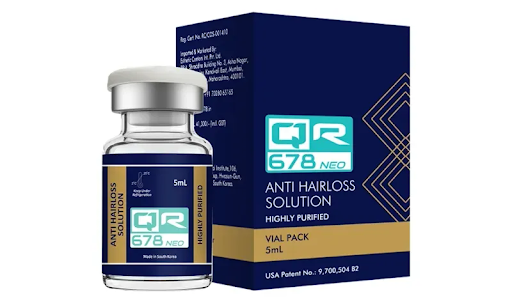
Multiple Hair Restoration Solutions — From GFC and QR678 for early stage intervention to Bio-FUE and FUT for surgical restoration, every option is available under one roof and matched to your exact stage.
7 Clinics Across Delhi NCR — Consistent, high-quality care at locations across Delhi, Gurgaon, and Noida — so follow-up appointments fit into your schedule, not the other way around.
Book Your Hair Transplant Consultation at Evoke
Understand your stage, your donor capacity, your options, and your realistic timeline — all in one doctor-led consultation. No obligations.
Frequently Asked Questions