.svg)

Hair Transplant Side Effects: What's Normal and What's Preventable
Getting a hair transplant is a big decision and knowing what recovery looks like makes the whole experience much smoother. The side effects that come after surgery are short-lived, well-understood, and very manageable with the right information.
Your scalp goes through a clear, predictable healing process and each stage brings you closer to your final results. This guide walks you through what to expect week by week, what is completely normal, and the few signs that are worth paying attention to so your recovery stays on track.
Common & Temporary Side Effects
These three side effects show up in almost every patient. They are not complications — they are signs that your scalp is doing exactly what it should.
Swelling After Hair Transplant: How Long Does It Last?
Swelling is one of the most common things patients notice after surgery. It usually peaks around day 2 or 3 and can travel from your forehead down toward your eyes. This happens because of the fluids used during the procedure and is completely normal.
One practical tip: sleep with your head elevated at a 45 degree angle for the first 3 to 4 nights. This alone reduces how much swelling builds up around your eyes and face.
Itching and Scabbing: What is Actually Happening on Your Scalp
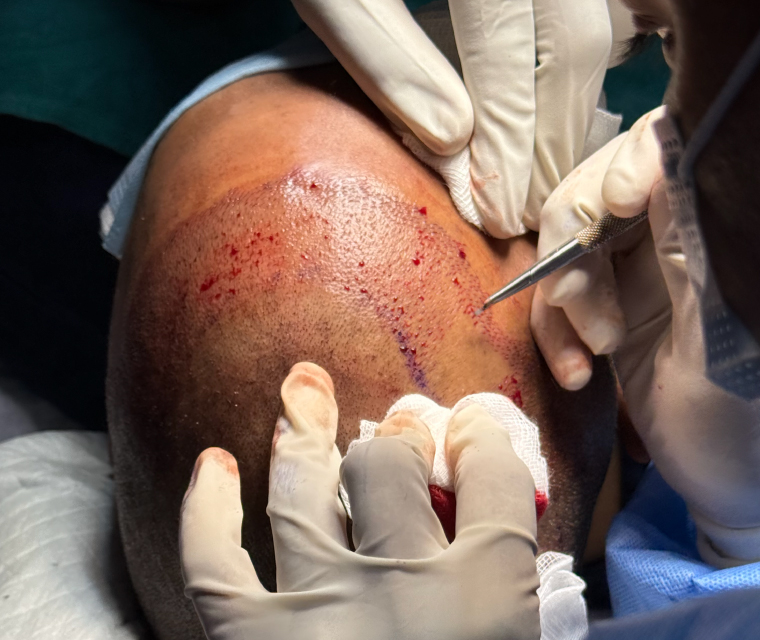
Itching after a hair transplant is your scalp healing. The micro-incisions made during surgery trigger your body's natural repair response, and that causes itching. Scabbing forms around the grafts as a protective layer.
Redness After Surgery: When Does It Go Away?
A pinkish tone on the scalp after surgery is normal. It typically fades within 7 to 10 days. If you have lighter skin, it may be slightly more visible. As long as it is fading and not spreading or getting warm to touch, there is nothing to worry about.
The "Shock Loss" Phenomenon: Why Your Hair Falls Out After Surgery
This is the most searched hair transplant side effect and the one that causes the most panic. Around 2 to 6 weeks after surgery, you will notice your transplanted hair falling out. This is called shock loss and it is a normal biological response.
Managing Moderate Risks: Folliculitis and Numbness
These are less common but worth knowing about before your surgery.
Folliculitis looks like small pimple-like bumps on the scalp. It happens when new hair is pushing through the skin and gets temporarily blocked. It can appear around months 2 to 4 when regrowth starts.
What you should do:
Do not pop or squeeze the bumps. Keep the scalp clean as directed. Inform your clinic if the bumps are spreading or painful. Managing scalp inflammation at this stage early on prevents it from turning into anything more serious. In most cases, your clinic will recommend a mild topical treatment and the bumps clear up on their own.
Local anaesthesia is used during surgery and it can affect nerve endings in the scalp temporarily. You may feel reduced sensation in the donor or recipient area for a few weeks after surgery.
This is not permanent. Nerve endings gradually recover and normal sensation returns, usually within 3 to 6 weeks.
Why Side Effects Occur: The Role of Technique and Environment
Side effects do not happen randomly. How your surgery is performed and where you recover matters quite a bit.
How Delhi's Climate and Dust Affect Post-Op Healing
Delhi's air quality and dust levels can slow down healing if you are not careful. An open healing scalp is more sensitive to pollutants and particulate matter in the air.
For the first week after surgery: stay indoors as much as possible, avoid direct sun on the scalp, cover your head loosely if stepping out (only as advised by your surgeon), and avoid dusty or smoky environments.
Knowing how to choose a safe clinic in Delhi also means checking whether they give you proper post-op care instructions specific to the local environment.
Why the Surgical Technique Matters More Than You Think
Smaller punches used during extraction mean less trauma to the donor area and less visible scarring. This directly reduces how intense your recovery is.
Using GFC for faster healing after surgery is another step that makes a measurable difference. Growth Factor Concentrate, taken from your own blood, is applied to the scalp to reduce inflammation and speed up tissue repair. Clinics that include this step see noticeably better recovery outcomes.
How Evoke Minimizes Your Risks
At Evoke, the approach to reducing side effects starts before the surgery even begins.
Pre-Surgery Scalp Scan & Blood Tests — A detailed scalp scan and blood tests give the surgical team a full picture of your hair health before anything is planned.
Smaller Punch Sizes — Smaller punch sizes during extraction keep trauma to the donor area minimal, directly reducing recovery intensity and scarring.
GFC Therapy During & After Surgery — GFC therapy is used during or after surgery to bring down inflammation and support faster healing.
Personalised Post-Op Care Plan — Every patient leaves with a post-op care plan built around their specific diagnosis, not a standard handout.
When to Seek Medical Attention: Recognizing Red Flags
Most side effects settle on their own within the first week or two. But there are a few signs that mean you should call your clinic without waiting.
Consult the Experts — Visit Evoke Hair Clinic in Delhi NCR
There is a big difference between a clinic that treats hair loss and one that actually understands it. At Evoke, nothing is recommended until they know what is actually causing your hair loss. That means a proper scalp scan and blood tests before any treatment is suggested. From there, everything including your recovery plan is built around what your results show, not what works for the average patient.
Book Your Consultation at Evoke Hair Clinic
Seven clinics across Delhi NCR. Doctor-led diagnosis. Personalised recovery plans. No guesswork — every decision is backed by your scalp's actual data.
Frequently Asked Questions