.svg)

GFC Treatment Cost in India: What Actually Determines the Price?
Growth Factor Concentrate therapy is a personalised clinical protocol where session design, injection mapping, and concentration standard are calibrated to each patient's scalp condition and stage of hair loss. The GFC treatment cost in India is not a fixed number — and that is not an accident.
Two patients presenting at the same clinic for the same treatment can receive structurally different plans, at different session counts and different total investment, because their scalp conditions are different clinical problems. The variables that drive that difference are worth understanding before any consultation.
Why No Two GFC Plans Are the Same
GFC cost is shaped by scalp condition, hair loss stage, session interval design, and the preparation standards a clinic maintains. A quoted price without a scalp assessment behind it is not a treatment plan — it is a placeholder.
What Is GFC Hair Treatment and How Does It Work?
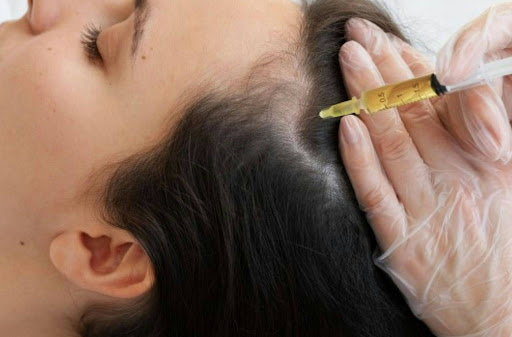
GFC, or Growth Factor Concentrate, is a non-surgical hair restoration protocol that uses a concentrated preparation of growth factors derived from the patient's own blood. The processing method isolates platelet-derived proteins — including PDGF, VEGF, and EGF — the specific biomolecules responsible for stimulating follicular activity and improving scalp microcirculation. These are injected directly into the scalp at zones of thinning or miniaturised follicles.
Both GFC and PRP use blood-derived growth proteins, but GFC isolates a broader and more concentrated fraction of those proteins. A clinic pricing GFC identically to PRP is either offering a simplified GFC preparation or not differentiating between them at all.
Why Does GFC Treatment Cost Vary Significantly Between Patients?
No two GFC treatment plans are identical, and variation in cost is a direct consequence of that. Four primary factors determine what an individual patient's GFC treatment will involve — and therefore what it will cost.
Your Scalp Condition
Mild diffuse thinning at Stage 2 requires a different injection density and zone map than advanced follicular miniaturisation at Stage 4. Denser, more targeted injection patterns require more preparation time and greater growth factor volume per session.
Hair Loss Stage
Early-stage patients typically respond faster, which can mean fewer sessions are required to achieve stabilisation. More advanced cases often require a longer induction phase before maintenance spacing begins. Session count is the single largest variable in total GFC treatment cost.
Session Interval Design
The induction, consolidation, and maintenance phases each have different spacing requirements based on how the scalp is responding. A plan that spaces sessions correctly produces better outcomes with fewer total sessions than a generic monthly schedule.
Clinic Preparation Standards
Centrifugation method, temperature conditions during separation, and time between processing and injection all affect the growth factor concentration that reaches the scalp. Clinics maintaining laboratory-grade preparation standards have higher operational costs — appropriately reflected in pricing.
How Many GFC Sessions Are Usually Recommended for Hair Regrowth?
GFC treatment is structured in two distinct phases, and the session count a clinic quotes should always specify which phase it covers. A number given without that context is not a treatment plan.
Most patients with early to moderate hair loss are recommended between four and six sessions during induction, spaced three to four weeks apart over the first six months.
The spacing ensures each injection lands when the follicle is in an active anagen phase and capable of responding to the growth factor stimulus.
Maintenance sessions at six-month and twelve-month marks sustain the follicular response built during induction. Their frequency depends on how completely the scalp responded to the induction course and whether the root cause of hair loss is still driving ongoing miniaturisation.
A plan quoted as "four sessions" and one quoted as "six sessions with maintenance" are not the same clinical scope, and the difference matters more than the per-session price.
GFC therapy that follows personalised session sequencing is what separates a protocol built around a scalp from one built around a price point.
What Factors Influence GFC Hair Treatment Pricing Beyond Session Count?
Session count is the largest cost variable, but it is not the only one. The following factors each affect what a clinic must invest to deliver a correctly structured GFC protocol — and by extension, what a patient should expect to pay.
| Pricing Factor | Why It Affects Cost |
|---|---|
| Scalp Assessment Quality | Trichoscopy-based assessment determines whether the protocol is correctly targeted from session one — without it, zone mapping is guesswork |
| Growth Factor Concentration | Higher-grade centrifugation produces a more concentrated preparation and requires specialised equipment |
| Doctor Credentials | Trained dermatologists and trichologists bring a clinical standard that affects injection technique, depth, and zone mapping accuracy |
| Injection Sites per Session | Targeted, zone-specific designs require more precise administration than broad-coverage approaches |
| Adjunct Therapy Inclusion | Plans incorporating LLLT or post-session scalp management are structurally more comprehensive and more effective for advanced cases |
| Follow-up Structure | Interim scalp assessments and plan adjustments between sessions reflect a more rigorous clinical standard — and are often not included in headline prices |
Does Hair Loss Severity Affect GFC Treatment Planning and Cost?
Hair loss severity is one of the most direct determinants of how a GFC plan is structured. A patient with early-stage diffuse thinning is a different clinical case from one with significant follicular miniaturisation over several years.
The second case requires a more intensive induction phase, more sessions before stabilisation, and closer monitoring throughout. The session count difference between the two cases — and therefore the cost difference — can be substantial even at the same clinic.
Early-Stage Loss
Follicles are miniaturised but still responsive. The induction phase produces faster stabilisation, fewer total sessions are required, and the overall investment is lower. Acting early is the most cost-effective approach to GFC treatment.
Advanced-Stage Loss
More intensive induction required. Greater injection density per session, longer time before consolidation begins, and closer monitoring throughout. Total session count — and therefore total cost — is meaningfully higher than for early-stage patients.
GFC vs PRP: Comparing the Cost and Clinical Approach
GFC and PRP are related but distinct, and this distinction matters when evaluating GFC treatment price. PRP uses standard centrifugation to concentrate platelets in plasma. GFC uses a more refined processing step that isolates growth factor proteins from platelet-derived granules, producing a higher concentration of the biomolecules that directly drive follicular stimulation.
GFC treatment cost is generally higher per session than standard PRP because the preparation process is more specialised. A clinic pricing both protocols identically is either offering a simplified GFC preparation or not differentiating between them at all.
The total sessions required for comparable outcomes from GFC may be fewer than with PRP, because each GFC session delivers more targeted follicular stimulation. The cost saving at the per-session level often disappears when the total course is counted.
Clinics offering GFC at PRP pricing are typically standardising what should be a variable protocol.
What Should Patients Evaluate Beyond GFC Treatment Cost and Pricing?
Price is the starting point of the evaluation, not the conclusion. Before choosing a clinic on the basis of GFC treatment cost, the following questions give a more complete basis for comparison.
Are Maintenance Sessions Required After the Initial GFC Therapy Course?
GFC therapy works with the hair growth cycle. Results continue developing in the months following the induction phase as stimulated follicles progress through their natural anagen and telogen phases. Most patients see the most significant improvement between months four and eight after beginning treatment.
Typical Maintenance Schedule
Patients with well-managed root causes typically require maintenance sessions at six-month and twelve-month intervals. The exact spacing depends on how well the scalp responded to induction and whether the underlying trigger is still active.
Seasonal Shedding Timing
In India, shedding phases intensify post-monsoon and in early winter. Scheduling a maintenance session before a known shedding window primes follicles with growth factors at the point when they are most susceptible to miniaturisation from seasonal DHT spikes.
Root Cause Management
Patients who address the root cause alongside GFC generally require fewer total maintenance sessions. Those with ongoing triggers — active hormonal fluctuation or recurring seasonal hair fall — may need closer spacing during the first year.
Things to Know Before Starting Your GFC Hair Therapy
Three clinical aspects determine whether GFC delivers what a patient expects. None are disclosed clearly enough in most clinic communications.
Expected Results Timeline
GFC produces gradual improvement, not an immediate one. Most patients see meaningful change between months four and eight — not within the first few weeks. This timeline is a biological property of the hair growth cycle, not an indicator of whether the treatment is working.
Induction Phase Consistency
Each GFC session delivers a growth factor stimulus that the following session builds on. Interrupting the induction phase before consolidation begins reduces the follicular response significantly. Patients who pause mid-course and resume later are not continuing a protocol — they are starting a weaker version of one.
Follicular Suitability Threshold
GFC works on follicles that are miniaturised but still active. Once a follicle has permanently ceased activity, growth factor stimulation cannot reactivate it. A trichoscopy assessment determines where a patient sits relative to this threshold before any protocol is designed.
How Evoke Clinic Approaches Personalised GFC Hair Treatment Planning
At Evoke, no GFC treatment plan is generated before a scalp assessment has been completed. Dr. Aishwarya conducts a trichoscopy evaluation at the initial consultation to map the density pattern, identify zones of active miniaturisation, and determine the root cause driving the hair loss — whether DHT-related, hormonal, nutritional, or stress-triggered. The GFC protocol is then designed around what that assessment shows.
Injection depth and zone mapping are calibrated per patient rather than applied uniformly.
Trichoscopy-Based Assessment — Every GFC protocol begins with a detailed scalp evaluation that maps density, miniaturisation pattern, and the root cause of loss. The protocol is designed around what the assessment shows, not a standard template.
Calibrated Injection Mapping — Injection depth and zone mapping are set per patient. The growth factor preparation is concentrated to laboratory grade and administered to the specific follicular zones identified at assessment.
Structured Follow-Up — Interim scalp assessments between sessions allow the plan to be adjusted as the scalp responds. Follow-up consultations are part of the protocol, not an add-on billed separately.
Book Your GFC Consultation at Evoke
Seven clinics across Delhi NCR. Every GFC plan begins with a trichoscopy scalp assessment — no protocol is designed before that assessment is complete. Come in to understand your scalp's exact condition and what a correctly structured GFC course would involve for you.