.svg)

Does PRP Hair Treatment Hurt? A Patient's Complete Guide to PRP Pain and Discomfort
PRP for hair is not a pain-free procedure, but it is also not the painful experience most patients imagine before their first session. The needle size used for scalp injections is significantly finer than a standard medical needle, and the volume of plasma injected per site is small.
Most patients describe the sensation as a series of sharp pinches, each lasting a fraction of a second, followed by mild pressure. The discomfort is real, temporary, and manageable for the majority of patients who complete the session.
Things Every Patient Should Know Before Their First PRP Session
Three realities about PRP discomfort are worth understanding before walking in, because they change how the session feels from the patient's side.
Pain Is Not Harm
PRP injections create micro-trauma in the scalp tissue by design. That micro-trauma is what triggers the platelet-derived growth factor response that stimulates follicular activity. The mild soreness felt during and after the session is a consequence of the mechanism, not a sign that something has gone wrong.
Zone Sensitivity Varies
The scalp is not uniformly sensitive. The crown is generally the least sensitive area. The hairline and temples, particularly the frontal hairline where DHT-pattern loss tends to be most advanced, carry more nerve endings and produce sharper sensations during injection.
First Session Feels Different
Most patients report that the first PRP session feels more intense than later sessions. The scalp has not adapted to the injection pattern, and anticipation increases the perception of discomfort. By the second and third sessions, patients typically describe the procedure as noticeably more tolerable.
Common Concerns Patients Have Before Their First PRP Treatment
There are certain concerns that surface consistently before a first PRP session. Each has a clinical explanation that changes how the patient experiences the procedure once they understand it.
A standard PRP session involves between 20 and 50 injection points across the treatment zone, depending on the density pattern and the area of miniaturisation. Each injection takes less than a second. The cumulative duration of actual discomfort across the full session is measured in seconds per injection point, not as a sustained period of pain.
The concern about scalp sensitivity is valid for patients who have experienced seborrheic dermatitis, psoriasis, or chronic scalp tightness. An inflamed or irritated scalp produces sharper sensations during injection than a healthy one, and a pre-treatment scalp assessment exists specifically to identify whether the scalp condition needs management before the first session.
The concern that PRP will hurt more than the experience of losing hair does not hold up clinically. Hair loss in its active phase produces no physical pain. PRP produces temporary, localised discomfort that resolves within hours. The two are not comparable experiences on any clinical scale, and the procedural discomfort is consistently rated as more tolerable than anticipated by patients who expected it to be severe.
What Does PRP Hair Treatment on the Scalp Feel Like?
The sensation during a PRP session breaks down by phase of the procedure.
The blood draw that produces the plasma for processing is conducted from the arm. A standard venipuncture needle is used to draw 10 to 20 millilitres of blood. The sensation is identical to a routine blood test and lasts 30 to 60 seconds.
After the blood draw, the sample is centrifuged for approximately 10 to 15 minutes to separate the platelet-rich plasma from red blood cells. This phase involves no physical sensation for the patient.
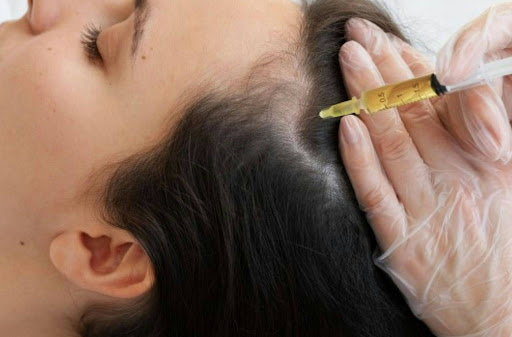
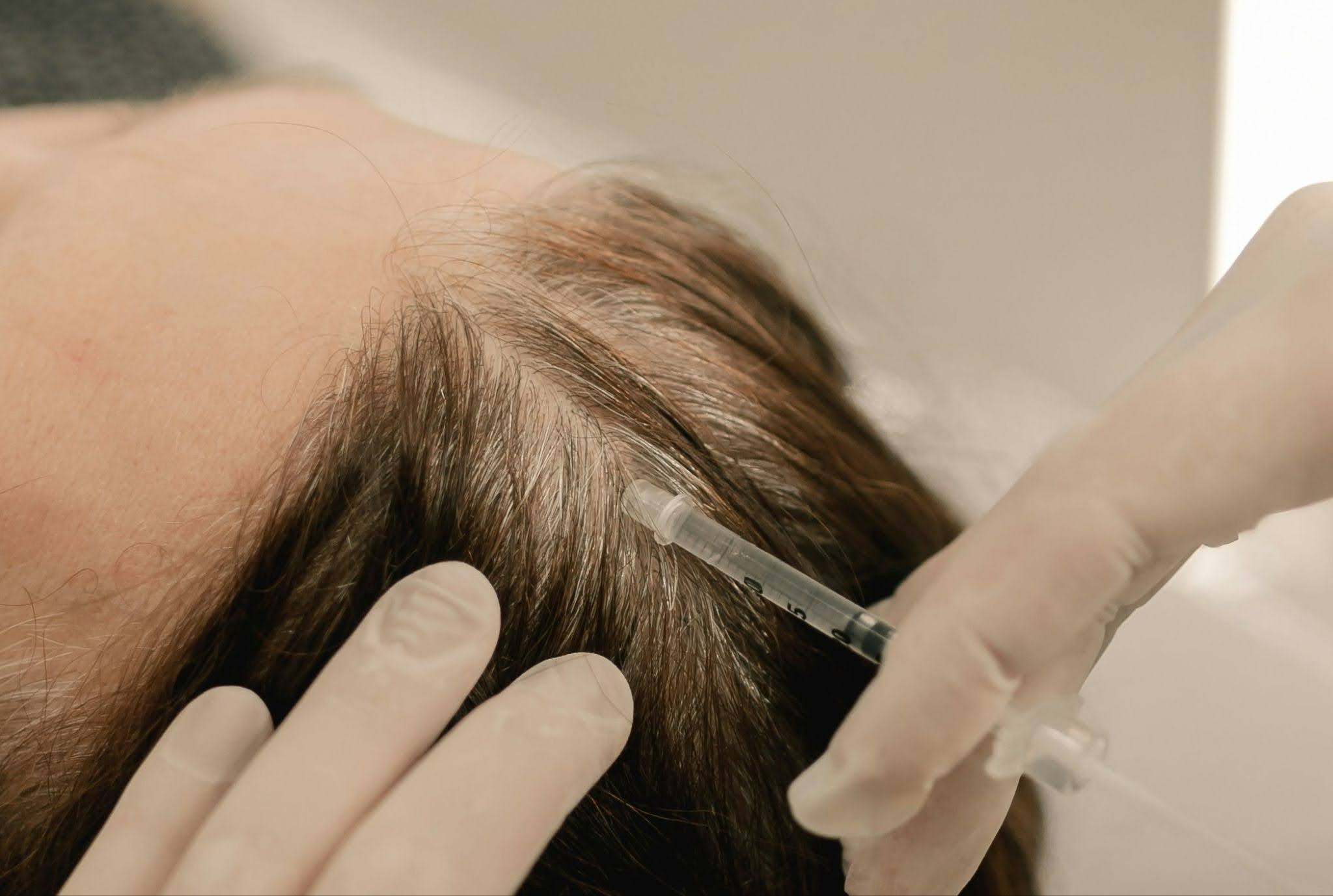
The plasma is loaded into a fine-gauge syringe and injected into the scalp at predetermined points across the thinning zone. Each injection produces a brief, sharp pinching sensation followed by mild pressure as the plasma disperses into the tissue. Patients commonly describe individual injections as feeling like a mosquito bite, a quick sting, or a sharp tap. The sensation fades within seconds of each injection. Across the full session, the total experience is one of intermittent sharp sensations with pressure, not sustained pain.
Which Part of PRP Treatment Feels the Most Uncomfortable?
Scalp sensitivity is not uniform. The intensity of each injection changes depending on which zone is being treated, and understanding this before the session prevents the assumption that every injection will feel the same.
The trigeminal nerve branches that innervate the frontal scalp carry a higher density of sensory fibres than parietal and occipital regions. This is a neurological property of the scalp, not a technique variable. Patients with receding frontal hairlines receive injections directly into this zone, which is why frontal hairline PRP is the most frequently cited source of discomfort.
The crown and mid-scalp produce mild to moderate sensations. Most patients tolerate these zones without topical anaesthetic and describe the sensation as a dull tap rather than a sharp pinch.
The occipital region at the back of the scalp is the most comfortable zone for injection. Patients receiving treatment across the full scalp consistently report it as the most tolerable area of the session.
How Long Does Post-PRP Scalp Discomfort Typically Last After Treatment?
Discomfort from PRP is time-limited and follows a predictable pattern. Most patients find that understanding the timeline in advance makes the post-session experience easier to manage.
Discomfort is limited to the moment of each injection and the brief pressure that follows. Between injection points, the scalp feels normal. The full injection phase lasts between 20 and 40 minutes.
Mild scalp tenderness is the most common post-session experience, similar to the feeling of light pressure across the treated area. Mild redness and a slight sensation of warmth are normal responses to the micro-trauma of the injection process and resolve without intervention by the end of the first or second day.
Swelling around the frontal hairline occurs in some patients and reflects the inflammatory response the platelet growth factors are designed to trigger. It is not a sign of an adverse reaction. It typically resolves within 24 to 48 hours without treatment.
What Clinical Factors Affect PRP Pain Levels During Treatment?
Four clinical variables determine how a specific patient experiences PRP discomfort.
| Factor | Effect on Discomfort Level |
|---|---|
| Scalp condition at time of treatment | Active inflammation, dermatitis, or psoriasis on the scalp increases sensitivity significantly |
| Injection zone | Frontal hairline and temples produce sharper sensations than crown or occipital areas |
| Individual pain tolerance | Baseline sensory sensitivity varies across patients and directly affects reported discomfort |
| Needle gauge used by the clinic | Finer gauge needles produce less tissue displacement and less perceptible pain per injection |
| Depth calibration | Injections placed at the correct dermal depth produce less resistance and less discomfort than incorrect depth |
| Session number | Second and subsequent sessions are consistently reported as more tolerable than the first |
Do Hair Clinics Use Numbing Cream Before PRP Sessions?
Two comfort management approaches are used in clinical practice: topical anaesthetic and scalp cooling. Both reduce the sharpness of individual injections, but they work differently and have different clinical trade-offs.
Lidocaine-based topical cream applied 30 to 45 minutes before the injection phase reduces the sharpness of each injection to a dull pressure rather than a pinch. It is particularly effective for frontal hairline treatment where sensitivity is highest.
Not all clinics apply it as standard: some clinicians prefer to avoid it because a fully anaesthetised scalp provides less patient feedback during injection, and adrenaline compounds in certain formulations may cause transient vasoconstriction that reduces platelet activity in the treated tissue.
Chilled air applicators used immediately before each injection reduce the skin's sensory response at the injection point without the vasoconstriction risk associated with adrenaline-containing topical agents. Some clinics use cooling as the primary comfort tool specifically to preserve the platelet environment while still managing patient discomfort.
The choice between topical anaesthetic and cooling depends on the patient's sensitivity level, the treatment zone, and the dermatologist's clinical preference. A clinic that offers the option and explains the clinical trade-off clearly is demonstrating a more transparent standard of care than one that applies a fixed protocol regardless of the patient's needs.
Is PRP More Painful Than Other Non-Surgical Hair Treatments?
Among the non-surgical hair restoration protocols commonly offered, PRP sits in the middle range for procedural discomfort. The comparison is useful because patients researching PRP are often also considering GFC, microneedling, or eventually hair transplant surgery.
PRP vs GFC
GFC injections follow a similar administration method and produce comparable discomfort profiles. Some patients find GFC marginally more intense because the growth factor preparation is slightly more viscous, creating slightly more tissue resistance per injection. The difference is subtle and rarely cited as a deciding factor between the two protocols.
PRP vs Microneedling
Scalp microneedling produces a more diffuse surface discomfort than PRP because the needle array contacts a wider area simultaneously. Many patients describe microneedling as a persistent buzzing or scraping sensation across the scalp, compared to the brief individual pinches of PRP injections. Neither is categorically more painful; they feel different in character.
PRP vs Hair Transplant
Hair transplant surgery requires local anaesthetic injection into the scalp before follicle extraction and implantation. The local anaesthetic injections are widely described as the most uncomfortable part of the transplant procedure, producing a sharp burning sensation that fades quickly as the anaesthetic takes effect. Post-operative soreness lasts several days, considerably longer than the post-PRP recovery period, and the full procedural intensity of a transplant is substantially higher than a PRP session.
How Evoke Hair Clinic Focuses on Comfortable PRP Sessions
Patient comfort during PRP at Evoke is managed across three stages of the session, not as a single afterthought at the point of injection.
Pre-Session Scalp Assessment — Scalp assessment before the first session reviews the patient's scalp condition, sensitivity markers, and any active inflammation that would affect the treatment experience. Patients with active seborrheic dermatitis or scalp psoriasis are managed for those conditions before PRP begins, because treating on an inflamed scalp both increases discomfort and reduces the efficacy of the plasma injections. The assessment is not a formality.
Zone-by-Zone Injection Protocol — The injection protocol at Evoke uses fine-gauge needles and moves zone-by-zone from the least sensitive areas to the most sensitive, allowing the patient to adapt progressively rather than encountering the highest-intensity zones without prior exposure. This sequencing consistently reduces reported discomfort compared to random injection patterns.
Post-Session Scalp Management — Scalp cooling is offered after the injection phase to reduce redness and tenderness in the immediate post-treatment period. Patients can review the injection sequencing, comfort options, and what the first appointment involves at their consultation.
Can Post-Session PRP Scalp Discomfort Be Reduced With Aftercare?
Post-session scalp discomfort can be managed with straightforward aftercare measures.