.svg)


The Truth About GFC Hair Treatment: Busting Myths & Unveiling Benefits
Scrolling through hair treatment advice online can make GFC hair treatment sound either revolutionary or completely unnecessary. One article compares it with PRP, another promises dramatic regrowth, while discussion forums are filled with people trying to decode whether the treatment actually works or not.
The confusion usually comes from treating every type of hair loss like the same problem. Hair thinning caused by active follicular miniaturisation behaves very differently from permanent baldness, which is exactly why some people respond well to GFC while others do not see meaningful improvement.
Read this blog to understand the kind of support this solution provides, what it targets and what kind of improvements can one expect at the end of the road.
The Short Answer
GFC hair treatment is a regenerative, non-surgical procedure that stimulates weakened follicles directly at the scalp level. It works best for miniaturised but still biologically active follicles — typically Stage 2 to Stage 4 thinning patterns — and produces gradual, cycle-dependent results rather than overnight changes.
How Does GFC Hair Treatment Stimulate Hair Growth?
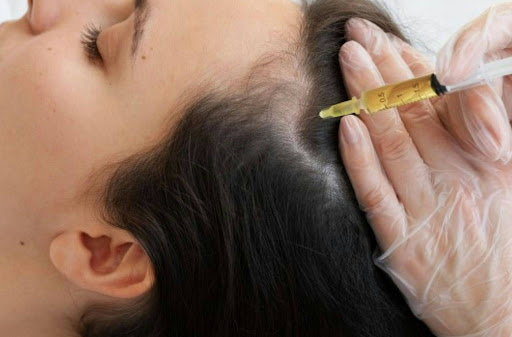
GFC hair treatment is a regenerative, non-surgical procedure designed to stimulate weakened follicles directly at the scalp level. Unlike topical products that work only at the surface, GFC treatment for hair loss delivers concentrated growth signals into areas where follicular activity has started slowing down because of progressive thinning.
Growth Factor Activity
The preparation contains purified growth factors such as EGF, PDGF, VEGF, and IGF-1 that support blood vessel formation and follicular repair.
These signals help make the active growth phase of the hair cycle last longer and deliver more nutrients to roots that are starting to thin.
Follicular Response
During the treatment, injected growth factors work around miniaturised follicles that are still biologically active.
This helps improve scalp health, reduce weakening around the follicle, and support thicker hair growth over time.
GFC Preparation Process Works Step by Step
The preparation process behind GFC hair treatment is what separates it from standard plasma hair treatment protocols. While both treatments begin with a blood draw, the processing stage changes how concentrated and targeted the final injectable preparation becomes.
Around 16 ml of blood is collected through standard venepuncture, similar to a routine blood test. The process takes only a few minutes and does not usually require anaesthesia.
The blood is processed inside a specialised GFC kit using controlled centrifugation. During this stage, the gathered platelets release concentrated growth factors and at the same time inflammatory white blood cells are separated out. This creates a cleaner injectable preparation compared to traditional PRP hair treatment.
A topical numbing cream is applied before microinjections are administered into thinning scalp areas. The concentrated growth factors target the dermal papilla region where follicular activity begins. Most patients return to normal routine the same day with only mild temporary redness.
GFC hair treatment cannot stimulate follicles that have already disappeared because of advanced fibrosis or long-standing baldness. This is why scalp assessment and dermoscopy is an important treatment protocol before planning sessions.
Right Loss Stage for GFC
The most suitable candidates for GFC therapy in Delhi for natural hair regrowth are patients experiencing Stage 2 to Stage 4 hair thinning patterns. At this stage, follicles are miniaturised but still capable of responding to concentrated growth factor stimulation.
What Results Can You Expect After GFC Hair Treatment?
Most patients expect visible hair growth soon after starting GFC hair treatment, especially after seeing dramatic before and after photos online. In reality, the treatment works more gradually because follicles need time to recover and complete a healthier growth cycle.
GFC improves the environment around weakened follicles, but the new hair those follicles produce still grows at the body's natural pace. Visible density improvement takes time because the follicle has to stabilise first before thicker strands begin emerging consistently at the scalp surface.
Most patients notice the following progression across the treatment course:
Reduced daily hair fall is the first change most patients report. The count on the shower floor and on the pillow decreases noticeably. This is a sign of stabilisation of the telogen shedding rate as follicular stress is reduced by the growth factor environment created by the first session.
Scalp coverage looks marginally better because existing hairs are growing at a slightly increased shaft calibre. The improvement is subtle at this stage and best confirmed by standardised photography under consistent lighting rather than daily observation in variable conditions.
Visible density improvement is apparent to most patients who have completed three to four sessions. The hairs emerging from stimulated follicles are thicker in shaft diameter than the hairs they replace, which changes the visual coverage significantly even without the addition of new follicular units.
The full benefit of an initial treatment course is normally observed after 8 to 10 months. Doctors recommend maintenance sessions within every 6 to 9 months to sustain the follicular environment established during the initial course.
GFC Hair Treatment Side Effects: Is It Safe?
GFC hair treatment is considered a safe regenerative procedure because the preparation comes entirely from the patient's own blood. No synthetic substance or external chemical is introduced into the scalp, which keeps the risk of allergic reaction extremely low. Most side effects are linked to the injection process itself and usually settle within a short recovery period.
Mild Injection Redness
Temporary redness and tenderness around the injection sites are common after the session. Most patients experience improvement within 24 to 48 hours without requiring additional treatment.
Lower Inflammatory Response
GFC contains fewer inflammatory cells compared to standard PRP hair treatment, and that is why many patients report lower scalp discomfort and easier recovery after injections.
Short Recovery Window
Most patients return to office work and regular routine the same day. Doctors usually recommend avoiding intense sweating or gym sessions for the first 24 hours.
Minor Swelling Possibility
Mild swelling or small bruising can occasionally appear around treated scalp areas. These effects generally resolve naturally within a few days after the procedure.
Not Suitable for Everyone
Patients with active scalp infections, uncontrolled medical conditions, blood clotting disorders, or autoimmune alopecia may require detailed scalp evaluation before considering GFC as a treatment option.
Pregnancy Precaution
Pregnancy remains a standard contraindication for GFC treatment for hair loss. Dermatologists usually recommend postponing treatment until after pregnancy and hormonal stabilisation.
3 Common Myths About GFC Hair Treatment
Three specific misconceptions about GFC hair treatment come up repeatedly in consultations and in online research. Addressing them before the first consultation saves time and changes what questions a patient actually needs answered in the clinic.
GFC Is the Same As PRP
The claim that GFC and PRP are the same protocol under different names — with clinics using the GFC label to justify a higher fee — is the most damaging misconception for patients trying to make an informed decision. Here is how GFC and PRP is different:
- PRP injects platelet-rich plasma with inflammatory cells, while GFC delivers purified growth factor concentrate with reduced inflammatory components.
- GFC releases and isolates growth factors before injection, unlike PRP where activation happens later inside the scalp.
- Whether GFC in Delhi is worth the cost difference from PRP depends on the patient's loss stage and prior PRP response, both of which a scalp assessment establishes.
Results of GFC Treatments Are Instant
Many patients expect visible density improvement within weeks, but follicular recovery follows the biology of the hair growth cycle.
- GFC stimulates follicles at the cellular level before visible shaft calibre improvement appears externally on the scalp.
- Follicles must re-enter a healthier anagen phase before producing visibly thicker replacement hair strands.
- Reduced telogen shedding usually appears earlier than measurable density improvement during the initial treatment months.
GFC Treatment Works for Everyone
GFC hair treatment works best on miniaturised follicles that remain biologically viable during scalp dermoscopy assessment.
- Stage 6 and 7 Norwood loss usually contains insufficient active follicles for regenerative stimulation response.
- Scarring alopecia replaces living follicles with fibrotic tissue, eliminating the biological treatment target completely.
- Follicular viability determines treatment response more accurately than visible baldness severity alone during consultation evaluation.
Daily Aftercare Routine That Protects Your GFC Treatment Results
What you do between GFC sessions affects how consistently follicles respond during the treatment course. The injections stimulate follicular activity, but the scalp environment still needs to support healing, circulation, and healthy growth cycles afterwards.
First 24 Hours
The scalp needs time to recover immediately after the session, especially around the injection sites.
- Avoid washing the scalp or applying styling products for at least one full day
- Skip helmets, tight caps, and gym sessions that create sweat or scalp friction
- Do not apply topical minoxidil until the following morning after treatment
Between Sessions
Long-term follicular recovery depends heavily on scalp care and nutritional support between appointments.
- Use a sulphate-free shampoo to protect the scalp barrier from unnecessary irritation
- Maintain adequate protein, iron, zinc, and biotin intake throughout the treatment course
- Avoid repeated high heat styling directly at scalp level during recovery months
The Reality Behind GFC Hair Treatment
GFC hair treatment usually becomes relevant when product-based routines do not create a noticeable improvement. At this stage, the follicles are still active, but they have weakened enough that surface-level products may no longer provide consistent support.
The treatment works by delivering concentrated growth factors directly into thinning areas of the scalp, where weakened follicles need stimulation the most. Results are not instant, because hair follicles recover gradually through natural growth cycles rather than overnight changes.
If scalp evaluation shows that the follicles are still alive and responsive, most patients notice reduced hair fall first, followed by gradual improvement in hair thickness and density over the next few months.
Scalp Assessment — A specialist evaluates the extent of follicular activity, scalp health, and thinning pattern through dermoscopy. All of this informs whether GFC is the right protocol and which session schedule fits your loss stage.
Targeted Growth Factor Delivery — The GFC preparation is injected into the dermal papilla region precisely where follicular activity originates. No guesswork, no off-the-shelf solution — every session is built around your scalp's actual data.
Aftercare & Maintenance Planning — You leave knowing how to care for the scalp between sessions and when to return for the next cycle. Seasonal demand in Delhi NCR is factored into the maintenance schedule.
Book Your Free Scalp Assessment at Evoke
The future of PRP and GFC hair treatments in Delhi and Gurgaon points toward earlier and more targeted intervention, which is precisely what GFC hair treatment is positioned to deliver when candidacy is confirmed. Book a free scalp assessment at Evoke to confirm your loss stage and determine whether this is the right protocol for where you currently are.