.svg)


What Are the Key Differences Between GFC and PRP Therapy?
Hair loss treatment conversations have changed rapidly in the last few years. Many people who once relied only on oils, shampoos, or supplements are now comparing clinical options like PRP hair treatment and GFC hair treatment. The problem is that most articles explain both treatments in broad terms without helping readers understand how they actually differ inside the scalp.
The difference between GFC and PRP becomes clearer when you look at concentration quality, inflammatory response, session planning, and how each treatment stimulates weakened follicles. Both treatments use components derived from the patient's own blood, but the preparation process and the biological response are not identical.
That difference matters when someone has active thinning, visible miniaturisation, or inconsistent response to products.
The Core Distinction
Both GFC and PRP start from the same blood draw. The difference is in what gets injected: GFC isolates purified growth factors before injection and removes inflammatory components, while PRP delivers whole platelet plasma that activates inside the scalp. That processing step is what separates them clinically — and determines which is right for your follicular condition.
How PRP Hair Treatment Supports Weakening Hair Follicles Naturally
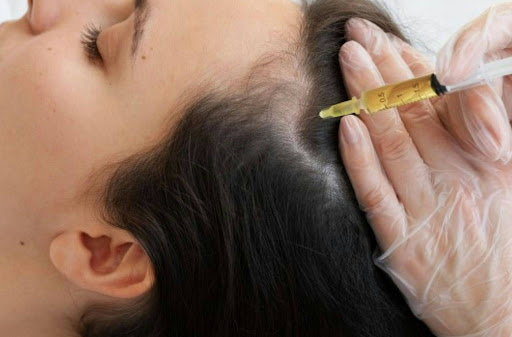
PRP supports weakening follicles by delivering concentrated platelets into the scalp, where they release growth proteins directly around the follicular structure. These proteins improve blood supply to the dermal papilla and extend the active growth phase of follicles that are miniaturising but still biologically viable.
The platelet concentration used in PRP releases proteins that support tissue repair and vascular activity around dormant follicles. Better blood supply can improve the follicle environment and extend the growth phase of the hair cycle.
PRP sessions are usually performed once every four to six weeks during the initial phase. Most patients require multiple sessions before visible density improvement becomes noticeable.
PRP works best when follicles are weakened but still biologically active. Patients with diffuse thinning, stress-related shedding, or mild androgenetic loss are often considered suitable candidates.
Many people exploring hair fall treatment options naturally reach PRP first because it is widely discussed and commonly available across dermatology clinics.
Why GFC Hair Treatment Creates More Targeted Follicular Stimulation
When both treatments start from the same blood draw, the difference in what gets injected is entirely a processing decision. GFC isolates the growth factors from the platelet before injection, removing the inflammatory components that come with whole plasma delivery. What reaches the follicle is a cleaner signal with less biological interference around it.
Purification Mechanism
The preparation system separates highly active growth factors from unnecessary cellular components. This creates a cleaner injectable formulation that focuses more directly on follicular signalling.
Patients who experienced inconsistent improvement with PRP sometimes move toward GFC treatment for hair loss because the stimulation response may feel more targeted and controlled.
Session Experience
Many dermatologists prefer GFC when patients want fewer sessions or lower post-procedure inflammation. Mild redness and scalp tenderness can still occur, but the recovery experience is often smoother for many individuals.
Patients researching early stage hair thinning frequently compare GFC with PRP because they want stronger intervention before considering long-term medication or transplant procedures.
Understanding Important Clinical Differences Between GFC and PRP Treatments
PRP and GFC both use the same biological system, and the difference in preparation determines which is appropriate for a specific follicular condition. Both achieve follicular stimulation effectively within the right patient profile. The question at assessment is which preparation matches what the follicle currently needs.
A follicle still in early thinning with intact repair signalling is suited to PRP because the scalp environment can work with it effectively. The broader platelet stimulation supports the existing follicular repair capacity.
A follicle in active miniaturisation where repair signalling has weakened needs a more direct input, which is where GFC's pre-extracted growth factor profile fits more effectively than broad platelet delivery.
Patients who have had prior treatment with one and plateaued are often reassessed for the other based on where the follicular response currently stands — not based on protocol preference. The right protocol for a patient at month one of thinning may not be the right protocol for the same patient at month eighteen.
Comparing GFC and PRP Across Treatment Performance and Recovery Metrics
The comparison below explains how GFC vs PRP functions differ in practical clinical settings. Patients comparing treatments after a detailed scalp health assessment often realise that the better option depends more on follicular condition than marketing language.
| Treatment Factor | PRP Hair Treatment | GFC Hair Treatment |
|---|---|---|
| Preparation Method | Platelet-rich plasma separated through centrifugation | Purified growth factors isolated more selectively |
| Inflammatory Response | Mild inflammation may be more noticeable | Lower inflammatory content in many cases |
| Session Frequency | Usually requires multiple repeated sessions | Often planned with fewer intensive sessions |
| Downtime Experience | Mild soreness and swelling possible | Usually smoother recovery experience |
| Suitable Stage | Commonly used for mild thinning | Often preferred for active follicular weakening |
| Response Timeline | Gradual improvement over months | Faster visible response possible for some patients |
| Treatment Objective | General follicular support | More targeted follicular stimulation |
Which Hair Loss Conditions Usually Respond Better to Each Treatment?
The difference between GFC and PRP becomes most relevant when mapped against specific hair loss conditions. A patient with stress-induced shedding presents a different follicular profile than one with visible crown miniaturisation. The condition determines the protocol.
Early Thinning Cases → PRP
PRP treatment for hair loss suits conditions where follicles are suppressed but structurally intact. Telogen effluvium, postpartum loss, and early androgenetic alopecia respond to PRP because the follicular structure is still viable and the shedding is cyclical rather than structural.
Progressive Loss Patterns → GFC
GFC treatment for hair loss addresses conditions where the follicular response to broad platelet stimulation has already weakened. Active androgenetic alopecia with visible miniaturisation, patients with inconsistent PRP response, and chronic telogen effluvium persisting beyond 12 months are the primary GFC candidates at that stage.
What Realistic GFC and PRP Results Timelines Usually Look Like
Hair restoration timelines rarely follow overnight transformation narratives. Both GFC and PRP require biological response cycles inside the follicle before visible density changes occur.
Month One
Many patients mainly notice reduced shedding and better scalp comfort. Visible density improvement is not yet apparent — the follicular stabilisation phase is still underway.
Months Two to Three
Texture improvement may begin as weakened follicles shift into stronger growth cycles. Some patients notice slightly thicker shaft diameter in hair that was previously fine and fragile.
Months Four to Six
Visible density improvement generally appears at this stage for most patients. GFC vs PRP response speed can vary depending on follicular condition, hormonal influence, nutrition status, and treatment consistency.
Understanding Common Side Effects and Safety Expectations Before Treatment Sessions
Both PRP and GFC are generally considered safe when performed by trained dermatologists using sterile protocols and appropriate patient screening.
Temporary Scalp Effects
Mild swelling, redness, tenderness, or temporary soreness may appear after injections. These effects usually settle within a short recovery period depending on scalp sensitivity and injection intensity.
Patients should avoid aggressive scalp manipulation immediately after treatment because the follicular environment remains temporarily sensitive.
Clinical Safety Factors
Since both procedures are autologous treatments, serious allergic reactions remain uncommon. Safety still depends heavily on correct preparation technique, sterile handling, and accurate patient evaluation.
Patients considering a personalised hair restoration plan should discuss hormonal conditions, medication history, and previous treatment response before selecting either protocol.
How to Decide Between GFC and PRP Hair Restoration Treatments
Deciding between GFC and PRP is not something a patient can accurately determine from research alone. The follicular condition at the time of assessment is what drives the recommendation, and that requires a direct scalp evaluation rather than a treatment comparison.
Before the consultation, five things are worth having documented:
Ready to Find Out Which Treatment Fits Your Scalp?
The protocol recommendation is based on what the scalp confirms, not on which treatment is more searched for. A detailed scalp assessment at Evoke maps your follicular condition and tells you exactly which protocol — and which session plan — is appropriate for where your thinning currently stands.
Book a Free Scalp AssessmentWhy Both Treatments Remain Popular Non-Surgical Hair Restoration Options
PRP and GFC continue growing in popularity because they offer follicular stimulation without surgical extraction or implantation. Many patients exploring non-surgical hair restoration treatments are looking for earlier intervention before hair thinning progresses toward transplant consideration.
Biological Compatibility
Both treatments use growth components derived from the patient's own blood, which reduces major allergy concerns and improves biological acceptance inside the scalp. This is one reason regenerative hair therapy has become widely accepted across dermatology clinics.
Minimal Downtime
Patients usually return to normal routine shortly after sessions. Mild redness or tenderness may appear temporarily, but recovery remains manageable compared to surgical procedures.
Flexible Treatment Support
PRP and GFC can support broader treatment plans instead of functioning as standalone procedures.
- Often combined with scalp care and medication support
- Nutritional correction may improve overall follicular response
- Maintenance sessions help preserve long-term follicular activity
- Early intervention usually creates stronger preservation potential